












Get your data working for you instead of sitting in a folder nobody opens.
Data in a folder is a cost. Data in a pipeline is a capability.

The story
Most organisations do not have too little data. They have too much of it in the wrong shape: spreadsheets with four naming conventions, exports nobody remembers scheduling, and a folder structure that only one departing employee fully understands.
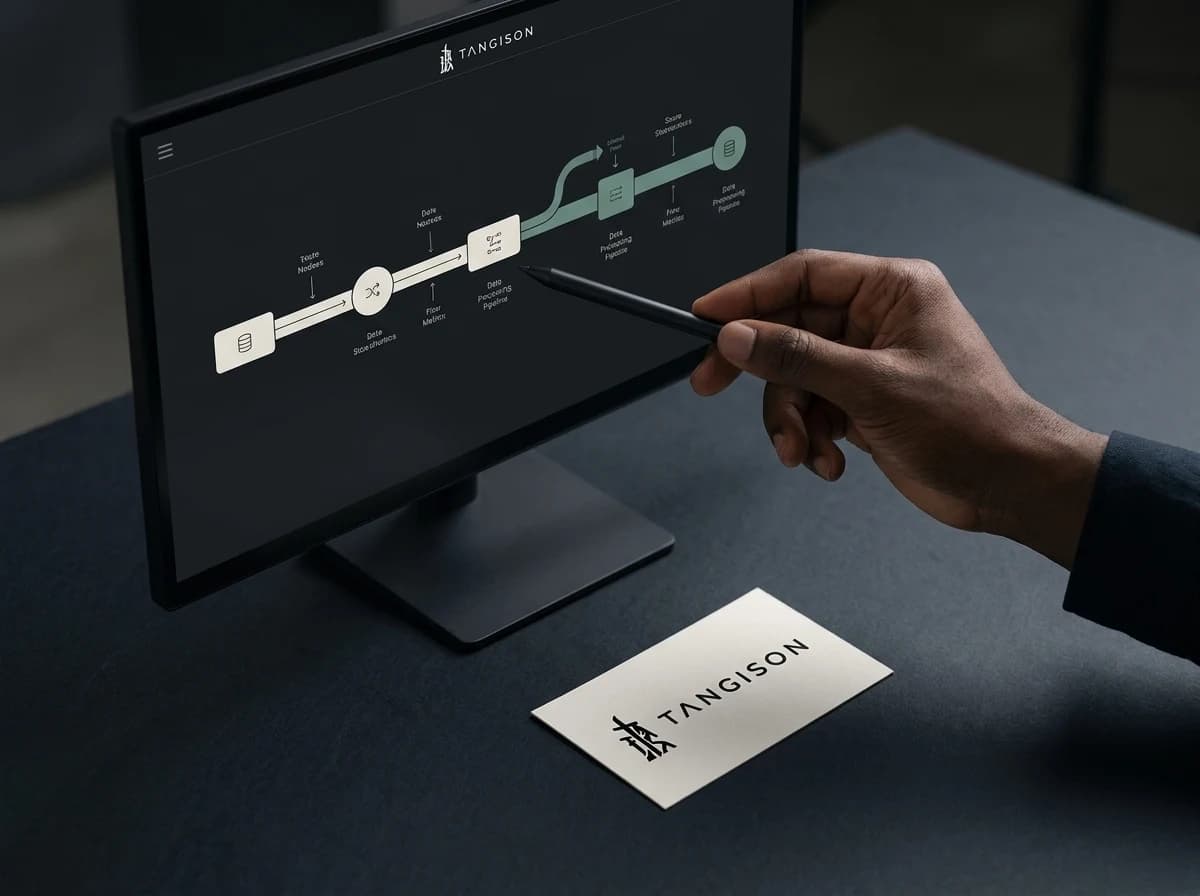
The work is unglamorous and decisive. Inventory what exists, consolidate what matters, clean what will be load-bearing, and move it into a shape that a report can be built on. Then build the report someone actually reads: one screen, current, and trusted.
We do not start with a dashboard. We start with the question the dashboard has to answer, and work backwards to the data that can honestly answer it.
Where it sits. Registered under Digital Transformation Services on the legal record. The company page carries the registration detail in full.
What gets delivered
- Data inventory: what exists, where, and in what shape
- Consolidation and cleaning of the load-bearing sets
- Pipelines and storage that keep the data current
- Reporting built around a real question, not a template
- The documentation that outlives the departing employee
Illustrative scenario. Not an actual client engagement.
A clearing and forwarding firm
Illustrative scenario: a regional clearing and forwarding firm where manifests live as paper and scattered exports, and dispatch decisions are made by phone because no single view of the day's consignments exists.
The engagement shape: inventory the records, consolidate the manifests into one structured store, and build the dispatch view the floor actually consults. Presented to show how the work runs. No client, outcomes, or metrics are implied or claimed.
Illustrative scenario.
Illustrative scenario. Not an actual client engagement. No client, outcome, or metric is implied or claimed.
Related
Other ways we help.
- Move off spreadsheets into a system that doesn't fall over under real use.
- Turn a stack of manual paperwork into a process your team can actually keep up with.
- Build an AI tool that does one job well instead of promising to do everything.
- Have someone technical in the room when you're negotiating a tender or contract.